Hair loss in women is common and most often caused by female pattern hair loss, temporary shedding after a trigger such as childbirth or illness, iron deficiency or thyroid problems. Unlike in men, it usually shows as diffuse thinning on top of the head and a widening parting rather than bald patches. With the right diagnosis, most women can slow the loss and many regain some density.
In short: See a doctor early and have your blood checked. Treat any deficiency first. For female pattern hair loss, minoxidil is the first-line treatment; a transplant can help if the thinning is limited to a defined area.
Common causes of hair loss in women
Female pattern hair loss
Female pattern hair loss (androgenetic alopecia in women) is the most common cause and affects up to 42% of women [2]. Follicles on the top of the head gradually shrink and produce finer, shorter hairs. Typical signs:
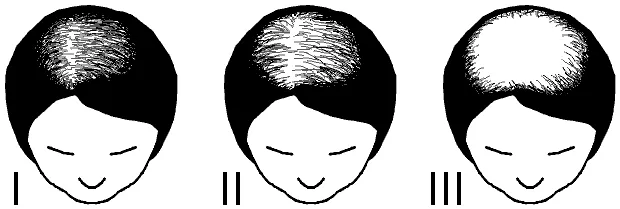
- the parting becomes wider
- the scalp shows through on top, especially under bright light
- the front hairline usually stays intact [1]
- the ponytail feels thinner
The severity is described by the Ludwig scale. See Ludwig 1 and Ludwig 2 for what each stage looks like. Genes play a role, and hormones can make it worse, but many women with this pattern have normal hormone levels [1].
Telogen effluvium
Many women experience sudden, diffuse shedding two to three months after a trigger:
- childbirth (postpartum hair loss)
- a high fever, infection or surgery
- crash diets or rapid weight loss
- severe stress
- stopping the contraceptive pill
The follicles stay intact and the hair usually recovers within six to twelve months. If shedding lasts longer, there may be an ongoing cause.
Deficiencies and thyroid problems
Low iron stores (ferritin) are common in women who menstruate and can contribute to hair loss. Thyroid disorders, both under- and overactive, are another frequent cause. Both are easy to test and treat.
Hormonal causes
- Polycystic ovary syndrome (PCOS): higher androgen levels can cause thinning on the scalp together with acne, irregular periods or excess facial and body hair.
- Menopause: falling oestrogen levels often unmask or accelerate female pattern hair loss.
- Hormonal contraception: some progestins with androgenic effects can worsen thinning in sensitive women.
Other causes
- Traction alopecia from tight ponytails, braids or extensions, typically at the temples
- Alopecia areata, causing round bald patches
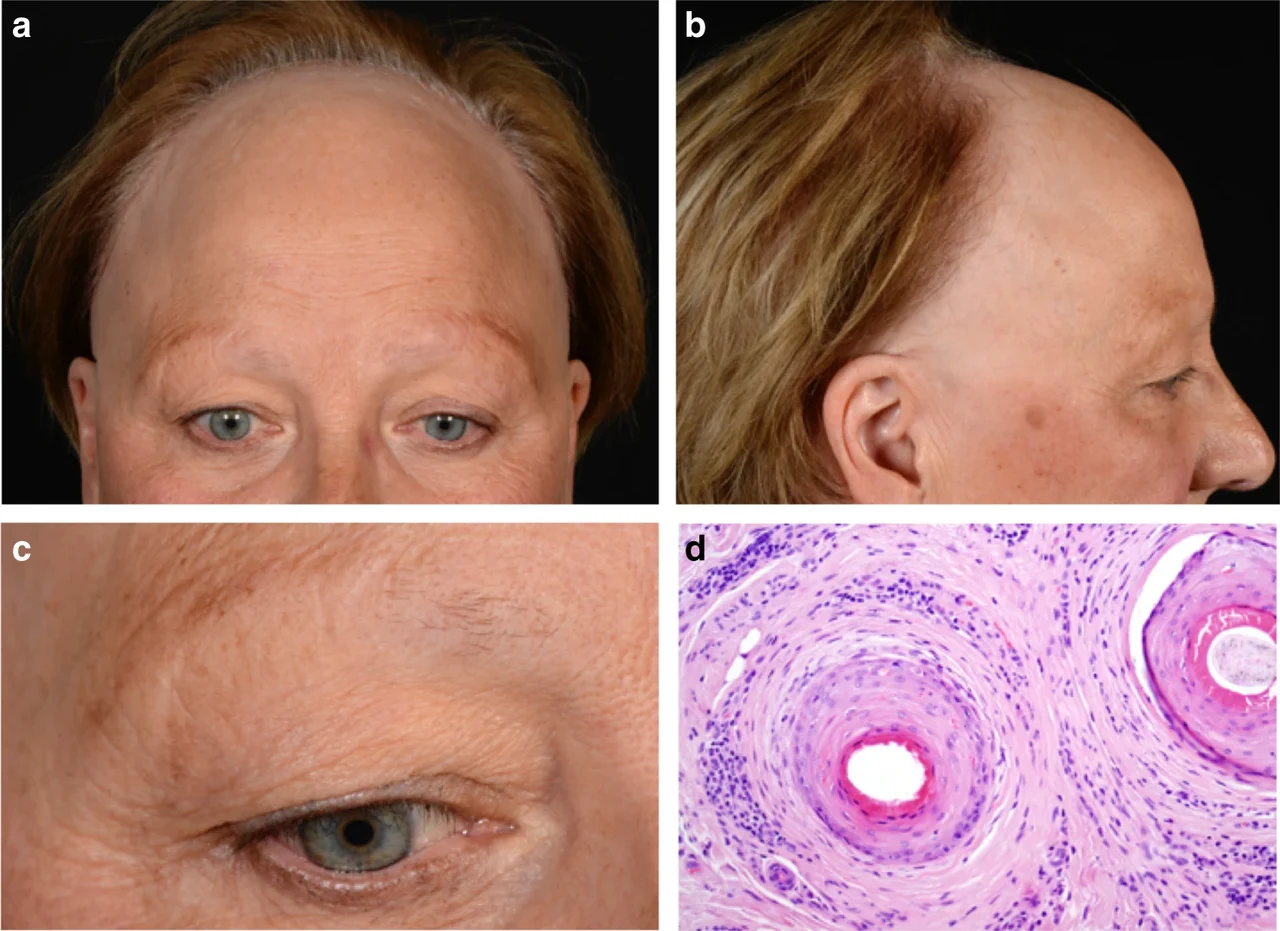
- Frontal fibrosing alopecia, a scarring condition that pushes back the hairline, most often after menopause; this needs early dermatological treatment
- Medication, such as some antidepressants, blood thinners or chemotherapy
For an overview of all forms, see our guide to hair loss causes and treatment.
Diagnosis: what to expect
In Switzerland, start with your GP or gynaecologist, or a dermatologist if your insurance model allows direct access. The investigation is generally covered by basic health insurance, subject to your deductible.
| Step | What is checked |
|---|---|
| History | Onset, family history, pregnancies, cycle, diet, stress, medication |
| Examination | Pattern of thinning, pull test, signs of excess androgens |
| Trichoscopy | Miniaturised hairs, inflammation, signs of scarring |
| Blood tests | Ferritin, blood count, TSH; sometimes vitamin D, zinc |
| Hormones | Testosterone, DHEAS and others if PCOS or excess androgens are suspected |
| Biopsy | Only if the cause remains unclear or scarring is suspected |
Some private hair clinics bundle trichoscopy, blood and hormone tests into a single appointment, for example the hair loss treatment for women at Mara in Zurich. This is self-paid, whereas the investigation through your GP is covered by basic insurance.
Female hair loss treatment
Correcting the cause
If tests show low iron, a thyroid disorder or another deficiency, treating it comes first. Hair usually takes several months to respond after levels are corrected.
Minoxidil
Minoxidil is the first-line treatment for female pattern hair loss [1,2]. In trials, women using it were about twice as likely to report moderate to marked regrowth as those on placebo [3]:
- Topical: 2% solution twice daily or 5% foam once daily, available without prescription in Swiss pharmacies
- Oral, low-dose: about 0.625 to 2.5 mg a day, prescribed off-label
Expect increased shedding in the first weeks and judge the effect after six to twelve months. A common side effect, especially with oral minoxidil, is extra facial or body hair [4]. What the studies show on dosing and safety of the tablets is summarised in our guide to low-dose oral minoxidil. Minoxidil must not be used during pregnancy or breastfeeding.
Spironolactone
Spironolactone is a diuretic with anti-androgenic effects. It is prescribed off-label for female pattern hair loss, particularly when there are signs of excess androgens [1]. Studies suggest it helps, especially combined with minoxidil, though high-quality trials are still lacking [5]. Important points:
- it must not be taken during pregnancy, so reliable contraception is needed
- blood pressure and potassium levels should be monitored, especially at the start
- possible side effects include irregular bleeding, breast tenderness and dizziness
Hormonal contraception
For some women, a combined pill with an anti-androgenic progestin can help, especially with PCOS. This is a decision for your gynaecologist, weighing hair benefits against the known risks of hormonal contraception, such as blood clots.
PRP and other add-ons
PRP injects growth factors from your own blood into the scalp. Small studies suggest it can modestly improve density [6], and it is often combined with minoxidil. Low-level laser devices and microneedling have some supporting evidence as add-ons.
Finasteride is not approved for women and must never be taken by women who are or may become pregnant. Some doctors prescribe it off-label after menopause, although at 1 mg it was no better than placebo in trials in women [3].
Is a hair transplant suitable for women?
A hair transplant can work well for women, but suitability needs a careful assessment. Good candidates usually have:
- thinning limited to a defined area, such as the parting, front or temples
- a dense, stable donor area at the back of the head
- hair loss that has been stabilised with medication
- a specific cause such as traction alopecia, a high forehead or scars
It is less suitable for diffuse thinning across the whole scalp, including the back, because the donor hair may be affected too. Active alopecia areata or scarring alopecia must be treated and stable first.
Many women prefer a non-shaven FUE technique so the procedure stays discreet. More on suitability, methods and costs on our page about hair transplants for women.
When to see a doctor
See a doctor promptly if:
- hair loss is sudden or patchy
- the scalp is itchy, painful, red or scaly
- your hairline is receding, especially with eyebrow loss
- you also have irregular periods, acne or excess facial hair
- you feel unusually tired, cold or have lost or gained weight
Swiss hair clinics can combine diagnosis, a treatment plan and, if needed, a transplant, with aftercare close to home. Compare specialists in our clinic comparison.
Frequently asked questions
What causes hair loss in women?
The most common causes are female pattern hair loss, temporary shedding after stress, illness or childbirth, iron deficiency and thyroid disorders. Hormonal conditions such as PCOS and menopause also play a role. Often more than one factor is involved.
What is the best treatment for female hair loss?
For female pattern hair loss, topical minoxidil is the first-line treatment. Doctors may add low-dose oral minoxidil or spironolactone off-label, and PRP can help as an add-on. Any deficiency, such as low iron, should be corrected first.
Which blood tests should women have for hair loss?
Usually ferritin and a full blood count, thyroid function (TSH) and sometimes vitamin D and zinc. If periods are irregular or there are signs of excess male hormones, testosterone and other hormones are checked as well.
Can women have a hair transplant?
Yes, if the thinning is limited to a defined area and the donor hair at the back of the head is stable and dense. It is less suitable for diffuse thinning across the whole scalp. A specialist should assess this carefully.
Does hair grow back after postpartum hair loss?
Yes, in almost all cases. Shedding typically starts two to four months after birth and settles within about six to twelve months. If it continues longer, it is worth checking iron levels and thyroid function.
References
Numbers in the text refer to these sources. Links go to PubMed, the publisher (DOI) or the authority.
- Carmina E, Azziz R, Bergfeld W et al. Female Pattern Hair Loss and Androgen Excess: A Report From the Multidisciplinary Androgen Excess and PCOS Committee. J Clin Endocrinol Metab 2019.PubMedDOI
- Kanti V, Messenger A, Dobos G et al. Evidence-based (S3) guideline for the treatment of androgenetic alopecia in women and in men - short version. J Eur Acad Dermatol Venereol 2018.PubMedDOI
- van Zuuren EJ, Fedorowicz Z, Schoones J. Interventions for female pattern hair loss. Cochrane Database Syst Rev 2016.PubMedDOI
- Vañó-Galván S, Pirmez R, Hermosa-Gelbard A et al. Safety of low-dose oral minoxidil for hair loss: A multicenter study of 1404 patients. J Am Acad Dermatol 2021.PubMedDOI
- Wang C, Du Y, Bi L et al. The Efficacy and Safety of Oral and Topical Spironolactone in Androgenetic Alopecia Treatment: A Systematic Review. Clin Cosmet Investig Dermatol 2023.PubMedDOI
- de Oliveira AFQ, Arcanjo FPN, Rodrigues MRP et al. Use of autologous platelet-rich plasma in androgenetic alopecia in women: a systematic review and meta-analysis. J Dermatolog Treat 2023.PubMedDOI
This article is for general information and does not replace medical advice. Whether a treatment is right for you can only be determined by an examination with a specialist.