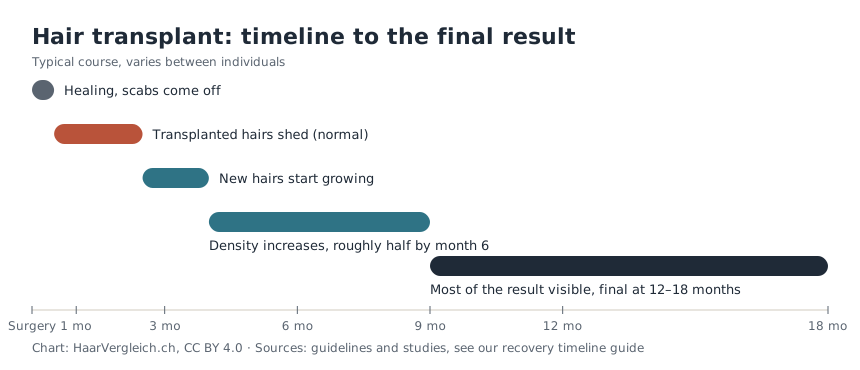
Hair transplant recovery happens in two stages. The visible healing, with redness and scabs, takes about one to two weeks. The actual growth takes much longer: transplanted hair falls out in weeks 2 to 8, new hair appears from month 3 to 4, and you see the final result after 12 to 18 months.
In short: Expect to look "operated on" for about 10 days, to look much like before during the shedding phase, and to wait a full year for most of the result. Patience is the most important part of recovery.
Many patients get a fright in the first months because the transplanted hairs fall out first. Knowing the timeline in advance makes that phase much less stressful.
Days 1 to 3: rest
- The recipient area is red, with small blood crusts around each graft.
- The back of the head is usually bandaged or checked at the clinic on day 1.
- Sleep with your upper body raised (a travel neck pillow helps) so nothing touches the grafts.
- No physical exertion, no alcohol, no smoking.
- Swelling of the forehead and around the eyes can appear on days 2 to 4. It goes down after a few days. Pain, discomfort and swelling are the most frequently reported after-effects in studies [2].
Days 3 to 14: washing and healing
- The first hair wash is usually on day 2 or 3, often at the clinic. After that you wash gently every day as instructed, usually with a lotion and special shampoo.
- The scabs come off between day 7 and day 14. Don't scratch or pick them.
- Itching is normal. Your clinic can recommend something to ease it.
- No direct sun, no helmet, no tight hat. A loose cap is usually fine from day 7 to 10.
Weeks 2 to 8: shock loss
This is when most of the transplanted hairs fall out. The follicles stay in the skin and will later produce new hair. Many patients look roughly as they did before the procedure during this phase. It's often called the "ugly duckling" stage, and it is part of every normal recovery.
Sometimes nearby native hair sheds temporarily as well. In one series of 621 patients this happened in fewer than 4%, mostly women [4]. This usually grows back within a few months. Our guide to hair transplant risks explains shock loss and when shedding is a concern.
Months 3 to 4: first growth
The first fine, often still thin hairs start to grow. Some people get small pimples (folliculitis) as hairs break through the skin [3]. This is usually harmless, but tell your clinic if spots become painful or widespread.
Don't judge the result yet. New hairs often come in fine, curly or slightly different in texture, and growth is patchy at first because follicles restart at different times. Many patients feel discouraged around month 4; that's normal, and photos taken in the same light each month help you see real progress.
Month 6: halfway
Roughly half of the result is visible. Hairs become thicker and longer. Most clinics invite you for a check-up around now.
Months 9 to 12: the final stretch
Density keeps increasing, hairs become stronger and fall more naturally. Guidelines tell patients to expect proper growth from about 9 months [1], and at 12 months most of the result is visible.
Months 12 to 18: the final result
The crown in particular often takes longer than the front. Only now can you and your surgeon judge whether a second session makes sense. What studies report on graft survival and patient satisfaction is summarised in our guide to hair transplant success rates.
Hair transplant timeline month by month
| Time | What happens | What you can do |
|---|---|---|
| Days 1–3 | redness, crusts, possible swelling | rest, sleep upright, first wash at clinic |
| Days 7–14 | scabs come off, barely visible afterwards | back to office work, loose cap allowed |
| Weeks 2–8 | transplanted hairs fall out (normal) | light exercise from week 1, gym from weeks 2–4 |
| Month 1 | donor area healed, recipient looks like before | swimming, sauna; scissor haircut |
| Months 3–4 | first new hairs | clipper cut on recipient area from months 2–3 |
| Month 6 | roughly half of the result | clinic check-up |
| Month 12 | most of the result | clinic check-up, photos |
| Months 12–18 | final result, especially at the crown | decide on any second session |
Practical questions: work, sport, haircuts
- Work: office work is usually possible after 3 to 7 days. If you'd rather colleagues didn't notice, take 10 to 14 days off.
- Exercise: light activity after a week, strength training and running after 2 to 4 weeks, swimming and sauna after about 4 weeks.
- Haircuts: scissors after about 4 weeks, clippers on the recipient area after about 2 to 3 months.
- Sun: protect the scalp for the first few months with a loose hat; sunburn on fresh grafts can damage healing tissue.
Protecting the result long term
Transplanted hair is resistant to hereditary hair loss, but your native hair around it is not. If it keeps thinning, the transplanted area can look isolated after a few years. Most patients need ongoing medical treatment because pattern hair loss is progressive [1]. Many surgeons therefore recommend medication such as finasteride or minoxidil during and after recovery, depending on your diagnosis. Discuss this at your 6- and 12-month check-ups rather than starting or stopping anything on your own.
Why local aftercare matters
Most patients have questions in the first months, and a few need treatment. A clinic in Switzerland can see you in person, react quickly to problems and document your progress with photos at each stage. That is one of the biggest advantages over surgery abroad, where follow-up is often limited to photos sent by message. For a full comparison, read Turkey vs Switzerland.
Before booking, it helps to know how many grafts you need, since larger sessions can mean slightly longer swelling and healing. Our clinic comparison shows which Swiss clinics include check-ups at 1, 3, 6 and 12 months in their price.
Frequently asked questions
When will I see results after a hair transplant?
The first new hairs appear after 3 to 4 months. At 6 months you typically see roughly half of the result, and the final result after 12 to 18 months.
How long is the recovery after a hair transplant?
The visible recovery takes about 7 to 14 days, until the scabs have fallen off and redness fades. Full growth of the transplanted hair takes 12 to 18 months.
When can I go back to work after a hair transplant?
For office work, usually after 3 to 7 days. If you don't want colleagues to notice, plan 10 to 14 days off.
When can I exercise after a hair transplant?
Light activity after about a week, strength training and running after 2 to 4 weeks, swimming and sauna after about 4 weeks. Always follow your clinic's instructions.
Is shock loss after a hair transplant normal?
Yes. Between weeks 2 and 8 most transplanted hairs fall out while the follicles remain in the skin. They start regrowing from month 3. Temporary shedding of surrounding native hair can also happen and usually recovers.
References
Numbers in the text refer to these sources. Links go to PubMed, the publisher (DOI) or the authority.
- Patwardhan N, Mysore V. Hair transplantation: standard guidelines of care. Indian J Dermatol Venereol Leprol 2008.PubMed
- Khatib M, Skorochod R, Wolf Y. Complications Following Hair Transplantation: A Systematic Literature Review and Meta-Analysis. Aesthetic Plast Surg 2025.PubMedDOI
- Romera de Blas C, Vega Díez D, Ricart Vayá JM et al. Complications in follicular unit excision hair transplantation: current evidence and practical approaches. Front Med (Lausanne) 2026.PubMedDOI
- Okochi H, Onda M, Momosawa A et al. An Analysis of Risk Factors of Recipient Site Temporary Effluvium After Follicular Unit Excision: A Single-Center Retrospective Study. Aesthetic Plast Surg 2024.PubMedDOI
This article is for general information and does not replace medical advice. Whether a treatment is right for you can only be determined by an examination with a specialist.