In almost all cases, Swiss health insurance does not cover a hair transplant. Hereditary hair loss is not classed as an illness, so the procedure counts as cosmetic, and neither basic nor most supplementary insurance will pay. Exceptions exist after accidents, burns or surgery, and there are ways to make the cost manageable.
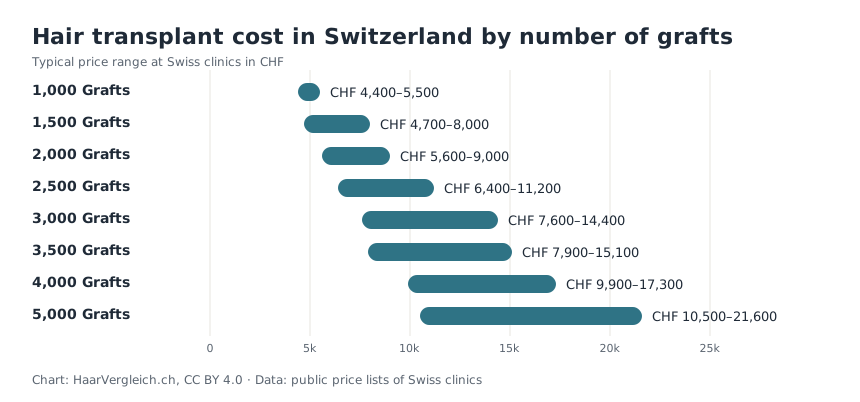
In short: Expect to pay the full cost yourself, typically CHF 6,000–10,000 for 2,000 grafts. Insurance may cover the medical diagnosis of your hair loss, and in rare cases reconstruction after an accident or burns, but only with written approval in advance.
If you've moved to Switzerland from a country with a different system, the Swiss model can be confusing. In the UK, for example, people often assume private medical insurance might help, and in some countries cosmetic surgery can be partly reimbursed. In Switzerland, the line between medical treatment and cosmetic procedures is drawn strictly, and hair restoration for hereditary hair loss falls clearly on the cosmetic side. Here's how each type of cover applies.
Basic health insurance (KVG/LAMal)
Compulsory basic insurance covers treatment that is effective, appropriate and cost-efficient, and that treats an illness. Hereditary hair loss (androgenetic alopecia) isn't considered an illness in this sense. A hair transplant is therefore a cosmetic procedure that you pay for yourself.
What basic insurance may cover, depending on your case, is the medical investigation into the cause of your hair loss by a dermatologist. That applies, for example, if a thyroid condition, iron deficiency or an autoimmune disease is suspected. Remember that your annual deductible (franchise) and the 10% co-payment still apply.
Supplementary insurance
Supplementary hospital and outpatient policies almost always exclude cosmetic procedures. Read your insurer's general terms and conditions (in German AVB, in French CGA) and, if unsure, ask in writing. Expat health plans and international policies follow their own rules, but they too generally exclude hair restoration for hereditary hair loss.
Overview: who pays what?
| Situation | Who might pay | Likelihood |
|---|---|---|
| Hereditary hair loss (men or women) | you | almost certain |
| Diagnosis of the cause by a dermatologist | basic insurance (after deductible) | often |
| Scarring after an accident | accident insurance (UVG/LAA) | possible, case by case |
| Burns | accident or health insurance | possible, case by case |
| Hair loss after surgery or radiotherapy | health insurance | case by case |
| Scarring alopecia | usually not suitable for transplant | – |
Accidents, burns and surgery
The picture can change if the hair loss has a clear medical cause:
- Scars after an accident or burns: accident insurance (UVG/LAA), which every employee in Switzerland has through their employer, or health insurance may cover reconstruction.
- Hair loss after surgery or radiotherapy: assessed case by case.
- Scarring alopecias: a transplant is often not appropriate at all. Treatment belongs with a dermatologist.
Important: get a written cost approval (Kostengutsprache) before the procedure. Very little is reimbursed after the fact.
Questions to ask your insurer
If you think your case could be an exception, contact your insurer before booking anything and ask in writing:
- Is a reconstruction after my accident, burn or operation covered, and under which policy?
- Which documents do you need (medical report, photos, cost estimate from the clinic)?
- Is cover limited to certain clinics or doctors?
- Does the deductible and co-payment apply, and is there a maximum amount?
Your doctor or clinic can usually help with the medical report. Keep copies of everything, as decisions are made case by case. If your request is refused, you can ask for the reasons in writing and, where appropriate, have your doctor submit additional information.
When hair loss is a medical problem
Not every case of hair loss is hereditary. Sudden or diffuse shedding can be caused by thyroid problems, iron deficiency, stress, medication or autoimmune conditions such as alopecia areata. These causes need a diagnosis and treatment by a doctor, and that part is generally covered by basic insurance. A transplant would not help in these situations and could even waste donor hair. This is especially relevant for women; see our page on hair loss in women.
Tax deductions
In Switzerland, medical expenses are tax-deductible if they exceed a threshold (for federal direct tax, 5% of net income). Purely cosmetic treatment is generally not considered a medical expense. With a medical indication, a deduction may be possible. Practice varies by canton, so check with your cantonal tax office.
Making a hair transplant affordable
- Instalment plans: many Swiss clinics offer financing over 12 to 48 months. Over 24 months, a CHF 7,000 procedure works out at about CHF 290 per month, before any interest.
- Conservative planning: you don't always need the highest graft count. A good consultation shows what's enough for your goal. Our guide on how many grafts you need gives realistic ranges.
- Use free consultations: most clinics offer an initial consultation free of charge. Compare at least two quotes; our clinic comparison helps.
- Compare total costs: offers from abroad add travel, hotel, time off work and possibly corrections. Our guide to hair transplant costs in Turkey adds up the real figures.
Medication: also usually self-paid
Treatments to slow hair loss, such as finasteride or minoxidil, are generally not covered by basic insurance when used for hereditary hair loss either. Finasteride 1 mg requires a prescription; topical minoxidil is available over the counter in Swiss pharmacies. See our guides to finasteride and minoxidil for what they cost and how well they work.
For an overview of prices at Swiss clinics, see our page on hair transplant costs in Switzerland. You can estimate your personal range with the graft calculator.
Frequently asked questions
Does Swiss basic health insurance cover a hair transplant?
No, as a rule it doesn't. Hereditary hair loss is not considered an illness under the Swiss Health Insurance Act (KVG/LAMal), so a hair transplant counts as a cosmetic procedure that you pay for yourself.
Does supplementary insurance pay for a hair transplant?
Almost never. Supplementary hospital and outpatient policies generally exclude cosmetic procedures. Check your policy's general terms and ask your insurer in writing if in doubt.
Are there any exceptions?
Exceptions are possible when hair loss is caused by an accident, burns or medically necessary surgery. Accident or health insurance may then cover part of the cost on a case-by-case basis. Always get written confirmation before the procedure.
Can I deduct a hair transplant from my taxes in Switzerland?
Purely cosmetic procedures are generally not deductible as medical expenses. Things may be different if there is a medical indication. Ask your cantonal tax office.
Can I pay for a hair transplant in instalments?
Yes. Many Swiss clinics offer instalment plans, sometimes from around CHF 250 per month. Check the interest rate and total cost before signing.
This article is for general information and does not replace medical advice. Whether a treatment is right for you can only be determined by an examination with a specialist.