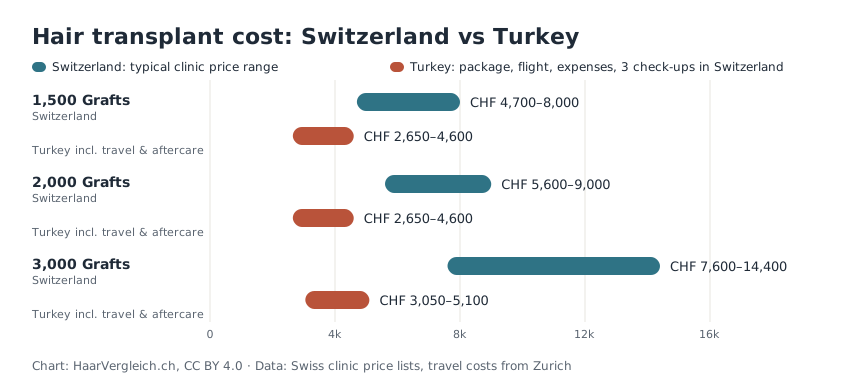
A hair transplant in Turkey is far cheaper than in Switzerland, but not as cheap as the headline price suggests. Once flights, extras and the check-ups you'll pay for at home are added, a typical package of CHF 1,800–3,500 becomes roughly CHF 2,700–5,100. The bigger cost is risk: many high-volume clinics leave most of the work to technicians, over-harvest the donor area and offer aftercare only by WhatsApp.
In short: Turkey can work out if you pick a carefully vetted, doctor-led clinic. But compare the true total, factor in the cost of anything going wrong, and read our full Turkey vs Switzerland comparison before you book.
Thousands of people from Switzerland travel to Istanbul each year for a hair transplant, many of them happy with the result. Turkey, and Istanbul in particular, has become the global centre of hair transplant tourism, an industry estimated at around US$1 billion a year [1]. This guide isn't meant to scare you off, but to give you the honest numbers and risks that package adverts leave out.
The true cost of a hair transplant in Turkey
Package prices look unbeatable. Here's what a realistic budget looks like from Switzerland:
| Item | Typical cost |
|---|---|
| Package (procedure, 2–3 hotel nights, transfers) | CHF 1,800–3,500 |
| Return flight from Zurich, Basel or Geneva | CHF 250–500 |
| Extras (meals, PRP or medication upgrades, tips, insurance) | CHF 150–350 |
| Companion travelling with you (optional) | CHF 350–700 |
| Self-paid check-ups with a Swiss doctor | CHF 450–750 |
| Realistic total | about CHF 2,700–5,100 |
On top of this comes time off work: most people need six to eight days in total, including travel and the most visible healing phase. In Switzerland, the same procedure means one day in the clinic and three to seven days off for office work.
For comparison, 2,000 grafts in Switzerland typically cost CHF 6,000–10,000, with diagnosis and a year of check-ups usually included. See our hair transplant cost guide for current Swiss prices.
Who actually performs the procedure?
In Switzerland, a hair transplant must be carried out under a doctor's responsibility. In many Turkish high-volume clinics, the reality is different: the doctor may draw the hairline and then leave, while technicians extract and implant the grafts, sometimes for several patients at the same time. Some clinics run multiple operations a day with one doctor nominally in charge. A 2025 review of the industry describes the expanded role of unsupervised technicians and "bait and switch" practices, in a sector with little regulation or consistent outcome reporting [1].
That doesn't automatically mean a bad result, as experienced technicians can be skilled. But surgical reviews report higher complication rates when the procedure is delegated to unlicensed, untrained staff [2], and the International Society of Hair Restoration Surgery runs a public campaign against illicit clinics and unlicensed technicians. But it does mean the person you meet on video call may not be the person operating on you.
Over-harvesting: the risk you can't undo
Your donor area provides only around 5,000 to 7,000 grafts over a lifetime. Packages advertising "unlimited grafts" or 5,000+ grafts in one session create an incentive to take as much as possible. The consequences:
- A thinned, see-through back of the head with visible dot scars [3]
- Little or nothing left for future hair loss or corrections
- A transplanted area that looks unnatural once surrounding native hair continues to recede; a good plan must account for future hair loss [5]
This is one of the most common reasons behind "Turkey hair transplant gone wrong" stories. Our guide on how many grafts you need explains realistic numbers by stage.
Aftercare by WhatsApp
After your flight home, aftercare at many clinics consists of a WhatsApp contact who asks for photos. That's fine when everything goes smoothly. It is not enough when you have:
- an infection or inflamed follicles that need examination and possibly antibiotics
- unusual swelling, pain or persistent redness
- poor growth at 6 to 12 months, when no one can examine you in person
You'll then need a Swiss doctor or clinic, at your own expense. In a systematic review of infections after cosmetic surgery abroad, Switzerland was among the most frequent reporting countries and Turkey among the main destinations [4]. Our recovery timeline shows what's normal and when to seek help.
When things go wrong: who pays?
Complications of a cosmetic procedure abroad are generally your own financial responsibility, and reviews note that they often end up burdening patients' home healthcare systems [1]. Swiss basic insurance doesn't cover hair transplants (see health insurance and hair transplants), and many Swiss clinics treat correction cases only on a self-pay basis.
- Treating complications in Switzerland: billed to you, with only limited cover for acute emergencies.
- Correcting a poor result (hairline, density, scarring): typically CHF 5,000–12,000, and only if enough donor hair remains.
- "Guarantees" from Turkish clinics usually mean a free repeat procedure in Turkey, which again requires travel and more grafts.
Our guide to hair transplant risks describes the medical side effects that apply everywhere.
How to vet a Turkish clinic if you go anyway
If Turkey is your choice, these checks lower your risk considerably:
- Ask who operates. Get the doctor's name and check registration and experience. Ask in writing which steps the doctor performs personally.
- Ask how many patients they treat per day. One or two per team is reasonable; six or more is a warning sign.
- Insist on a graft number with reasoning. Avoid "unlimited grafts" and anyone promising 5,000+ in one session without seeing your donor area.
- Request unedited before-and-after photos with graft numbers and time frames, ideally of patients with hair loss similar to yours.
- Get a written quote in English that lists exactly what's included.
- Clarify aftercare. Who examines you if there's a problem? Is there a partner doctor in Switzerland?
- Budget for a Swiss check-up before and after, so a local doctor knows your case.
- Avoid aggressive sales. "Today only" discounts, commission-based "patient coordinators" and pressure to pay a deposit immediately are red flags.
Language and expectations
Consultations are usually handled by English-speaking coordinators via WhatsApp or video call, often based only on photos you send. The doctor may not see your scalp in person until the morning of the procedure. That leaves little room to discuss your hairline, your donor reserve or whether you need medication first. Ask for a written plan in advance, and don't let the timetable of a package trip rush any decision on the day.
When Switzerland makes more sense
Switzerland is usually the better choice if your hair loss is still progressing and needs long-term planning, if you're a woman with diffuse thinning that needs a proper diagnosis first, if you can't take a week off, or if you'd rather not depend on a WhatsApp contact for a year of aftercare.
Whichever route you choose, compare like with like. Our detailed Turkey vs Switzerland comparison sets out cost, safety and aftercare side by side, and our clinic comparison shows what Swiss clinics include for the price.
Frequently asked questions
How much does a hair transplant in Turkey really cost?
Packages typically cost CHF 1,800 to 3,500 including two to three hotel nights. Add flights, extras, possibly a companion and self-paid check-ups back in Switzerland, and the realistic total is around CHF 2,700 to 5,100.
Is a hair transplant in Turkey safe?
It can be, at a well-run clinic with an experienced doctor. The risk lies in the large number of high-volume clinics where technicians do most of the work, too many grafts are harvested and aftercare is limited to WhatsApp messages.
What goes wrong with Turkish hair transplants?
The most common problems are an over-harvested, thinned-out donor area, an unnatural or too-low hairline, poor graft growth and infections that are treated late. Corrections in Switzerland typically cost CHF 5,000 to 12,000, if enough donor hair remains.
Who pays if there are complications after a hair transplant in Turkey?
Usually you do. Complications of a cosmetic procedure abroad are generally not covered by Swiss basic insurance, and treatment, extra flights or a correction come out of your own pocket.
How many days do I need in Turkey for a hair transplant?
Most packages involve two to three nights in Istanbul. Including travel and the first visible healing phase, plan around six to eight days away from work.
References
Numbers in the text refer to these sources. Links go to PubMed, the publisher (DOI) or the authority.
- Haider SA, Hasanzade S, Borna S et al. The Allures and the Alarms of the Hair Transplant Tourism Industry. Aesthetic Plast Surg 2025.PubMedDOI
- Williams KL Jr, El-Maghraby S. Complications with Follicular Unit Excision. Facial Plast Surg 2024.PubMedDOI
- Romera de Blas C, Vega Díez D, Ricart Vayá JM et al. Complications in follicular unit excision hair transplantation: current evidence and practical approaches. Front Med (Lausanne) 2026.PubMedDOI
- Gilardi R, Galassi L, Del Bene M et al. Infective complications of cosmetic tourism: A systematic literature review. J Plast Reconstr Aesthet Surg 2023.PubMedDOI
- Nadimi S. Complications with Hair Transplantation. Facial Plast Surg Clin North Am 2020.PubMedDOI
This article is for general information and does not replace medical advice. Whether a treatment is right for you can only be determined by an examination with a specialist.